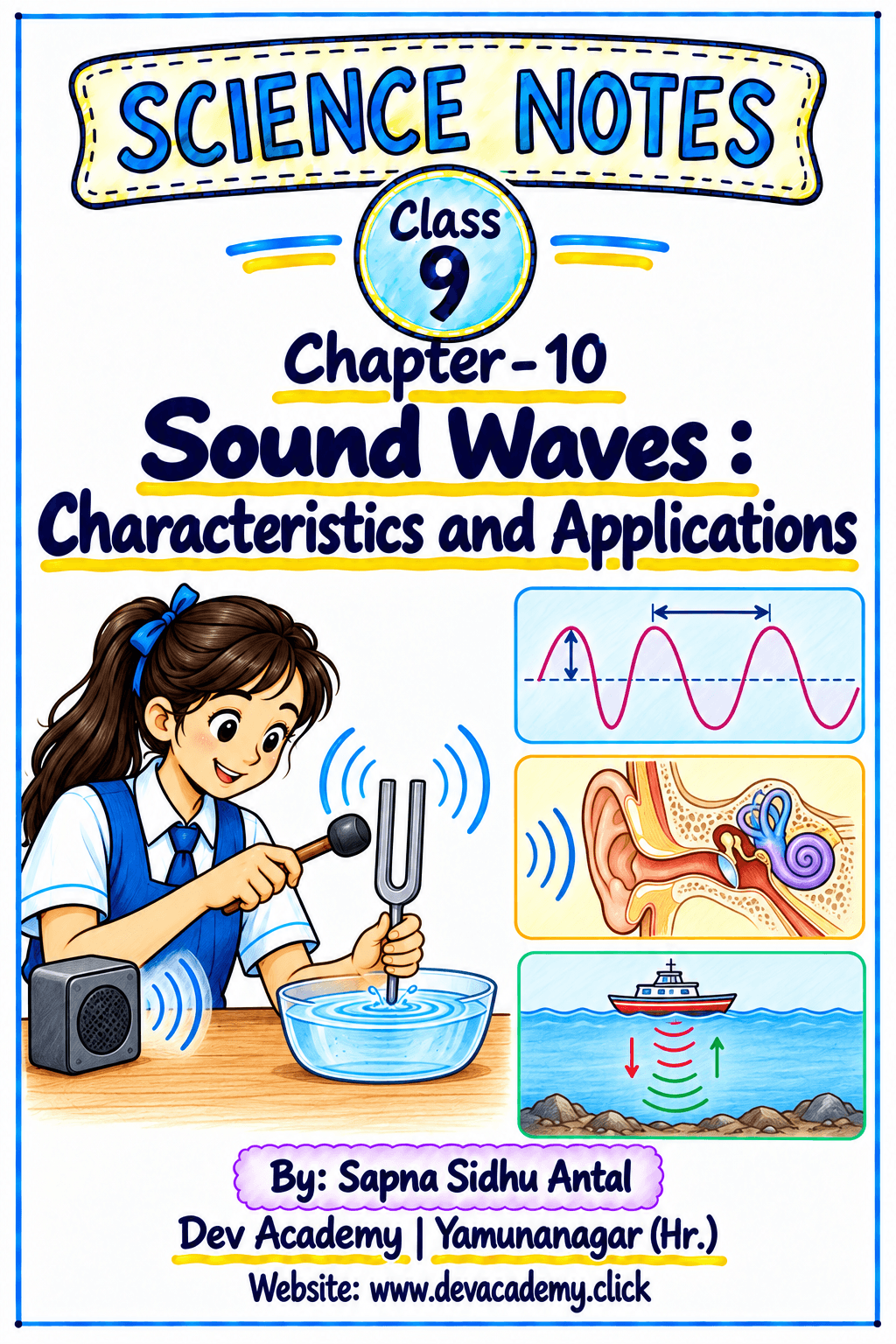
Class 9 Science Chapter 10 Notes
Sound Waves Characteristics and Applications
Here is a quick look at the core topics covered in these comprehensive notes:
- Production and Propagation of Sound: Comprehensive breakdowns of how vibrations create waves and why sound requires a material medium (solid, liquid, or gas) to travel.
- Longitudinal vs. Transverse Waves: Clear comparison frameworks tracking the movement of medium particles through Compressions (high pressure) and Rarefactions (low pressure).
- Characteristics of a Sound Wave: Crystal-clear definitions, variables, and SI units for Wavelength (λ), Frequency (ν), Time Period (T), Amplitude (A), and Velocity (v).
- The Fundamental Wave Equation: Step-by-step mathematical proof of the core physics formula: v = ν λ (Speed = Frequency × Wavelength).
- Perceptual Qualities of Sound: Understand the scientific differences between Pitch (determined by frequency), Loudness (determined by amplitude), and Quality/Timbre (wave shape).
- Speed of Sound Dynamics: Temperature and medium dependencies explaining why sound travels fastest in solids and slowest in gases.
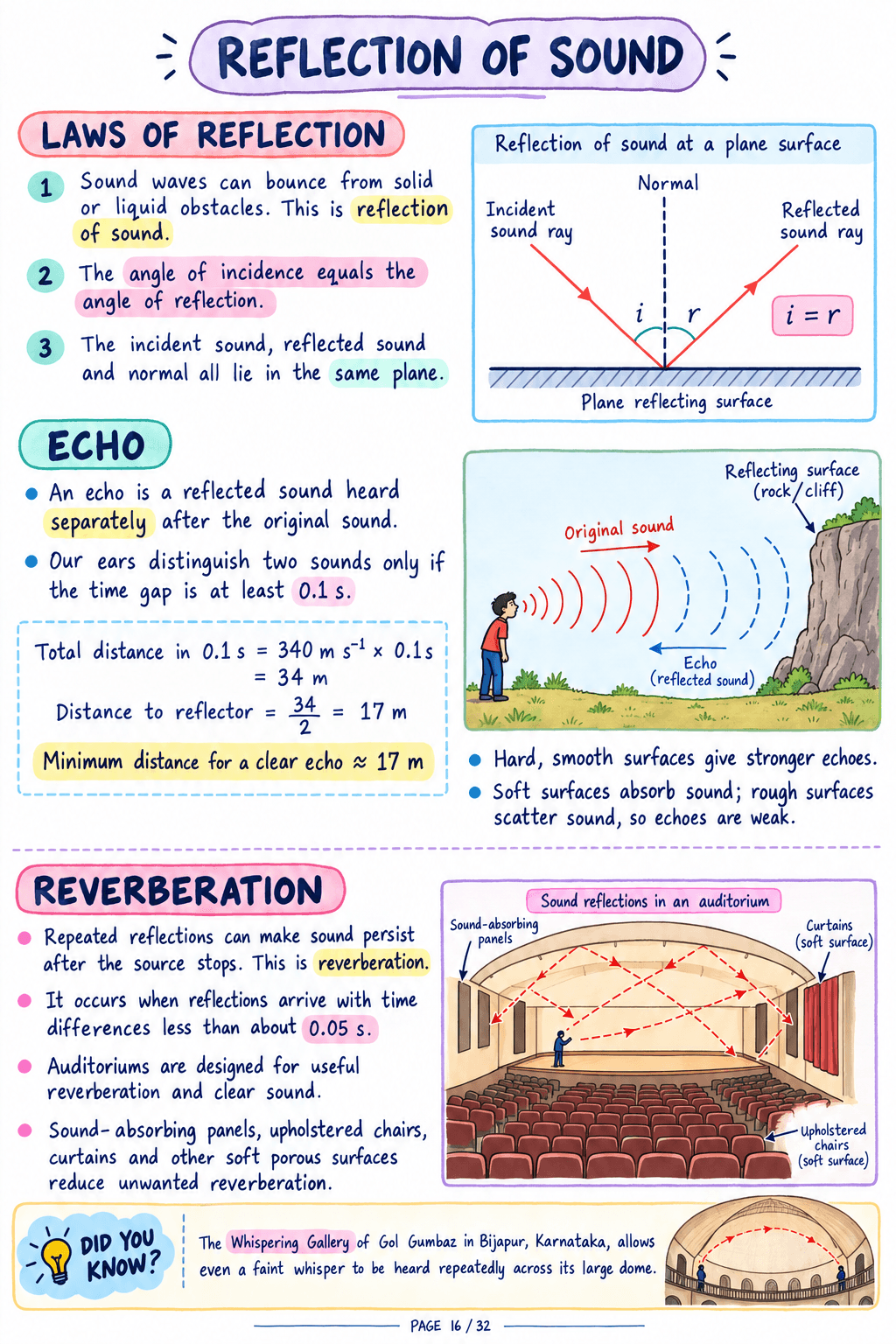
- Acoustic Phenomena & Applications: High-yield reference sections on the Reflection of Sound, conditions for hearing distinct Echoes, Reverberation management, and the industrial/medical uses of Ultrasound (SONAR and Echocardiography).
Below are a few sample screenshots from the notes PDF so you can check the handwritten style, diagrams, highlighted concepts, important questions, and mind maps before downloading.
Screenshot 1
Screenshot 2
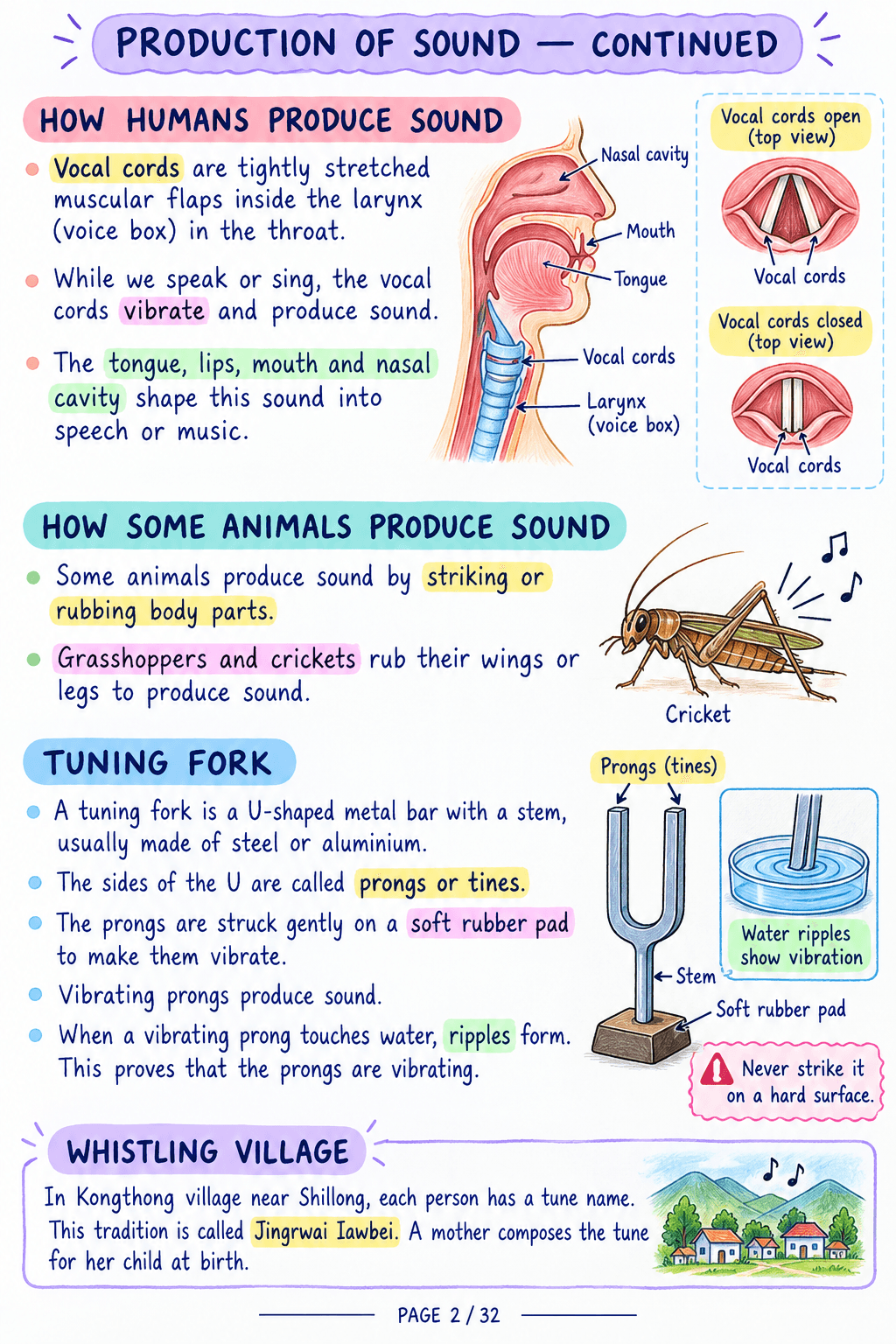
Screenshot 3